Black Maternal Health Week 2024

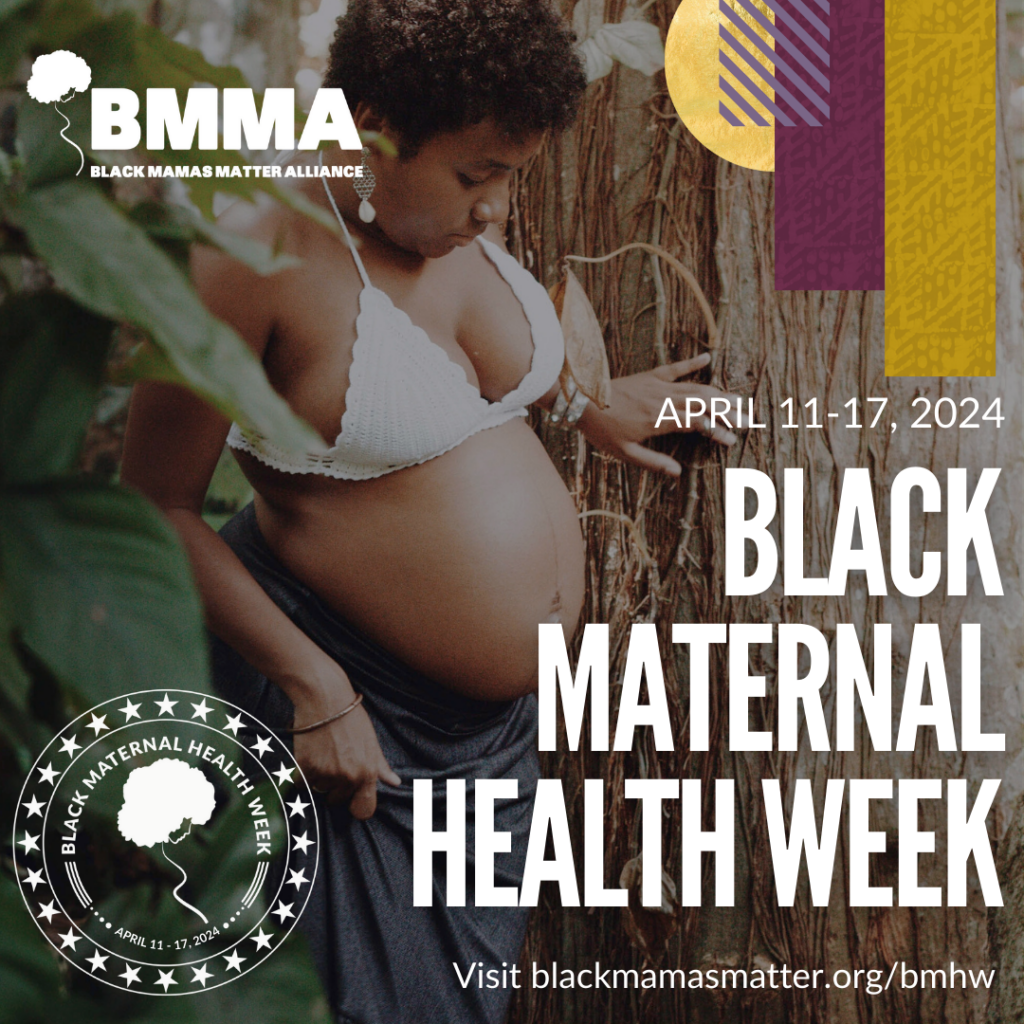
Every year, from April 11th to the 17th, we celebrate Black Maternal Health Week (BMHW). During this week, we come together to address the challenging issues that Black women face during pregnancy, childbirth, and postpartum.

This year’s theme “Our Bodies STILL Belong to Us: Reproductive Justice NOW!” aims to raise awareness of the increasing restrictions on abortion care access as well as the rise in criminalization due to pregnancy loss.

There are still significant racial disparities in maternal health outcomes, particularly affecting Black women. Regardless of income or education, Black mothers face significantly higher risks during childbirth. These challenges stem from deep-rooted issues, such as racism and bias within the healthcare system.
At PHFE WIC, we support Black Maternal Health by working alongside our sister program, CinnaMoms, which supports and creates a safe space and community for Black families to thrive. CinnaMoms hosts virtual and in-person support groups and special events every month.

Check out the events happening this month.

As we celebrate Black Maternal Health Week, remember that the fight for equity is far from over. It requires continuous commitment and action from policymakers, healthcare providers, advocates, and communities.

Check out the events happening this week and how you can get involved.

New Research: Increased WIC Cash Value Benefit Positively Impacts WIC Participants

During the COVID-19 pandemic, the USDA approved an increase to the Cash Value Benefit (CVB) for purchase of fruits and vegetables for WIC participants. A recent study by the PHFE WIC Research Team finds that participants were highly satisfied and reported increased purchase and consumption of fruits and vegetables.

With the CVB increase, participants reported improved quality and variety of fruits and vegetables purchased.

I thought (the CVB increase) was amazing, because we eat more FV since there’s
been an increase. (Before the increase) we were eating more processed food and I
do not think that my daughter was getting adequate nutrition from eating those
types of foods and she’s a picky eater too. So now that I am cooking vegetables
with every dinner and we’re snacking on FV throughout the day
.

-WIC Participant

It (CVB increase) was super good because we managed to buy more variety of FV
and are able to make a salad or make other FV for the children
.

-WIC Participant

This increase is temporary and currently set to end September 30, 2022. These findings support maintaining the increased CVB in the WIC food package permanently.

Read the full study published in the International Journal of Environmental Research and Public Health here.

New Research: Lactose-reduced Infant Formula Can be Associated with Higher Risk for Obesity

A new study by the PHFE WIC Research Team suggests that lactose-reduced infant formulas could have a correlation with a higher risk for childhood obesity. Infants who were given lactose-reduced formulas had a 10% higher risk for obesity at age 2 than infants who drank lactose-based formulas.

Lactose-reduced formulas remove the lactose carbohydrate from cows’ milk and replace it with corn syrup solids. These formulas quickly raise blood sugar and may cause rapid weight gain.

Are Babies Lactose Intolerant?

Marketers encourage parents with babies who cry more frequently than others to buy lactose-reduced formula by using words like “sensitive” or “gentle”. Most full-term babies are born with lactase enzymes that help them digest the lactose found in breast milk and formula. Only a small percentage of babies are lactose intolerant, usually preterm infants who did not develop the enzyme. Lactose intolerance usually develops from ages 3 to 5.

Should I stop giving my baby lactose-reduced formula?

Not at all! If you’re currently giving your baby lactose-free or lactose-reduced formula and baby is doing well, continue to offer what works best for your baby. If you’re noticing that your baby is fussy and want to change formulas, speak to your medical provider before making the switch. There are several reasons why baby may be fussy such as overstimulation, growing pains, or being tired. Learning how to understand your baby’s behavior will help you identify what your baby might need.

Read the full study published in The American Journal of Clinical Nutrition here.

WIC Research: Kids Benefit from Longer WIC Participation

Longer WIC Participation is Associated with Higher Quality Diet at 5 years of Age

A recent study by PHFE WIC’s research team and colleagues at UC Oakland found that longer WIC participation is associated with lower household food insecurity and higher diet quality.

This study compared children who participated in the WIC program for 1 to 4 years. They assessed diet quality, household food insecurity, and obesity at the end of WIC eligibility at 60 months.

The results showed that children who participated in the WIC program for the entire five years had a 31% lower chance of food insecurity than those who participated for shorter periods. In addition, children who participated for the full five years were also associated with higher overall diet quality.

These findings suggest that the WIC program promotes healthier lifelong habits and provides food stability to low-income families.

Read the full study published in The Journal of Nutrition.